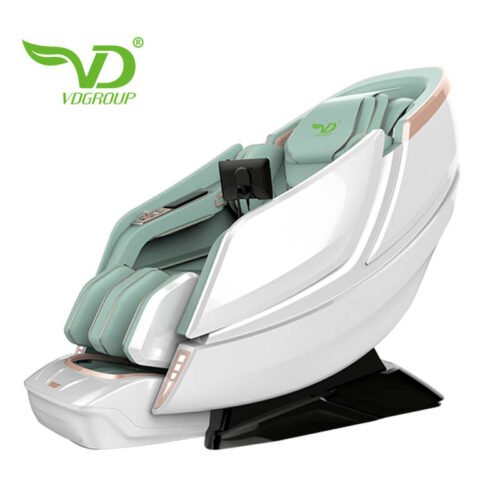
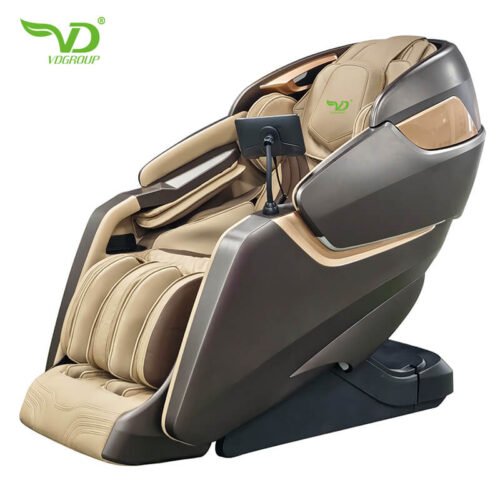
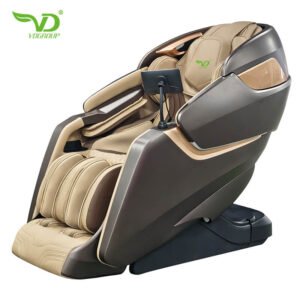
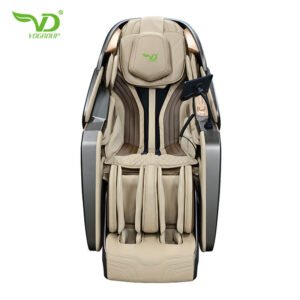
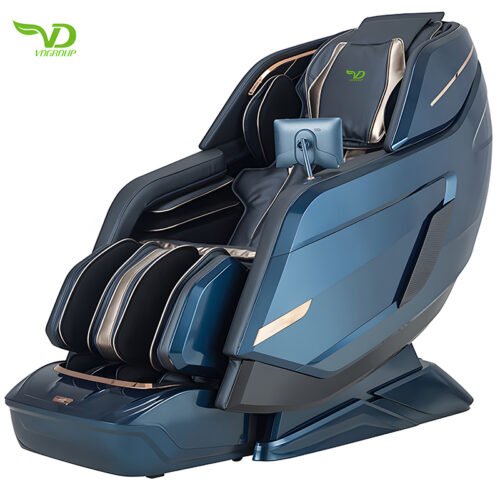
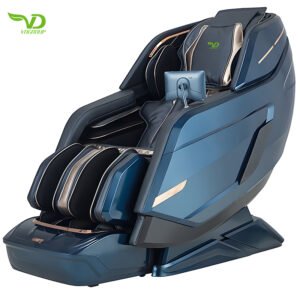
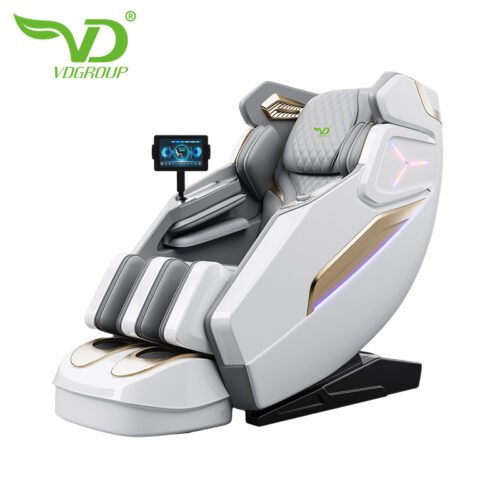
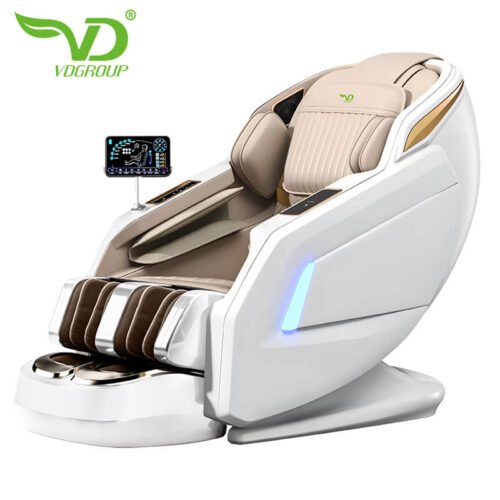
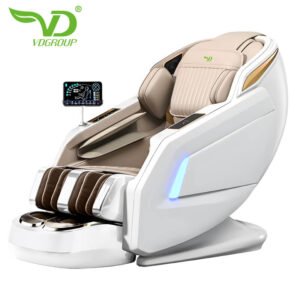
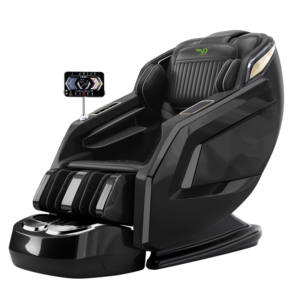
A massage chair is a powered recliner with motorised rollers that travel along a track behind your back, combined with airbags that compress and release your shoulders, arms, hips, calves and feet. Most chairs add heat, a body scan that maps the rollers to your spine, and preset programs that run a full session automatically.
The idea is simple: reproduce what a therapist’s hands do, but make it available at home, on demand, for as long as you want. A modern full-body chair covers everything from the base of your skull to the soles of your feet in one twenty-minute cycle.
How does a massage chair actually work?
Three systems do the work, and they run at the same time.
1. The roller mechanism
Inside the backrest sits a carriage carrying two to eight rollers. A motor drives it up and down a fixed rail while the rollers rotate, knead and tap. On better chairs the rollers also push forward into the muscle and vary their speed — that is what separates a 2D mechanism from a 3D or 4D one.
2. The airbag system
A compressor feeds air into bladders built into the shoulders, arms, seat, calves and feet. They inflate in sequence, so the pressure travels along the limb rather than clamping everywhere at once. Cheaper chairs might have 12 airbags; a flagship model can have more than 50.
3. The recline frame
Motors tilt the backrest and raise the leg rest independently. When the knees end up above the heart, the position is called zero gravity — it removes most of the load from the lumbar spine, so the same roller pressure feels deeper without feeling harsher.
What is a body scan and why does it matter?
Before the first pass, the chair runs the rollers slowly up your back and measures where your shoulders sit and how your spine curves. It then adjusts the roller path to your body. Without a scan the chair follows a generic track, which is why a chair that fits a 175 cm user can miss the shoulders entirely on someone 190 cm tall.
What is the difference between a massage chair and a massage recliner?
Massage chair
Massage recliner
Mechanism
Rollers on a fixed track, plus airbags
Vibration motors, sometimes simple rollers
Coverage
Neck to feet
Back and seat only
Recline
Motorised, often zero gravity
Manual or single motor
Typical price
$900 – $8,000
$300 – $1,200
Vibration feels pleasant but does not reach deep tissue. If your goal is relief rather than relaxation, the roller-and-airbag construction is the one that matters. More on this in massage chair vs massage recliner.
What do the massage techniques mean?
Kneading — rollers rotate in opposite directions, mimicking thumbs working into a knot.
Tapping — rollers strike rapidly, used to loosen a large muscle group.
Shiatsu — sustained pressure held on specific points, following Japanese practice. See shiatsu massage chairs.
Tuina — a Chinese technique combining pressing and rolling along the meridians.
Percussion — fast, shallow impacts, closer to a massage gun.
How long should a session be?
Most automatic programs run 15 to 30 minutes, and that is the right range for daily use. Manufacturers set a maximum of about 30 minutes for a reason: past that, deep-tissue work stops helping and starts irritating the muscle. Two shorter sessions beat one long one.
Who should not use a massage chair?
Talk to a doctor first if you are pregnant, have osteoporosis, a herniated disc, a pacemaker or other implanted device, deep vein thrombosis, uncontrolled high blood pressure, or a recent fracture or surgery. This page is general information, not medical advice.
Not sure which chair fits?
Tell us your height, your main complaint and your budget. We reply with two or three models that actually match, with prices.
A massage chair is a powered recliner with motorised rollers that move along a track behind your back plus airbags that compress your shoulders, arms, hips, calves and feet. Most add heat, a body scan and automatic programs covering the whole body in one session.
Do massage chairs really work?
For muscle tension, circulation and stress they do measurable work — the rollers and airbags apply real mechanical pressure, not just vibration. They are not a substitute for treatment of a diagnosed condition, and no chair can replace a therapist’s ability to find and adapt to a specific problem.
How long does a massage chair last?
A well-built chair used daily typically lasts eight to twelve years. The mechanism outlives the upholstery in most cases; PU leather starts to crack around year five to seven depending on sunlight and skin contact.
Can you use a massage chair every day?
Yes. Fifteen to thirty minutes a day is the normal recommendation. Avoid running back-to-back long sessions on the same muscle group — deep tissue needs recovery time just as it does after a manual massage.
Is a massage chair worth the money?
If you would otherwise pay for regular massage therapy, the maths works quickly: a $2,000 chair costs about the same as twenty studio sessions. If you expect it to fix a diagnosed back problem, it will not. See our full answer in are massage chairs worth it.
See them in the range
Every chair here has rollers on a track plus full-body airbags.